

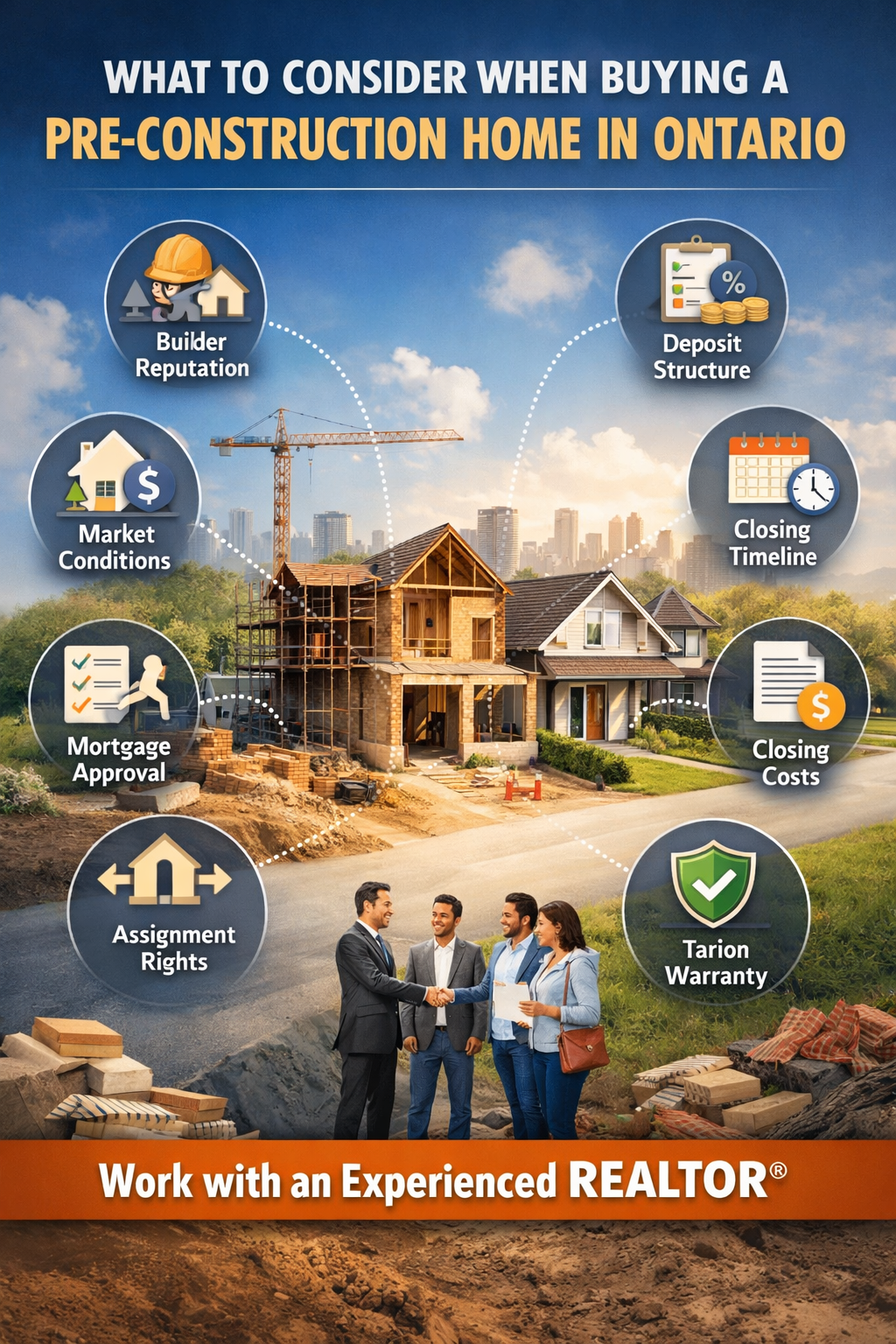
Buying a pre-construction home can be an exciting opportunity. You get a brand-new property, modern finishes, and often the chance to customize your home. However, purchasing pre-construction is very different from buying a resale property.
Before you sign the agreement, here are the key things every buyer should consider.
1. Builder Reputation & Track Record
Not all builders are the same. Before committing:
-
Research past projects
-
Check online reviews
-
Visit completed communities
-
Ask about construction timelines
A reputable builder with a strong history of delivering quality homes on time is essential.
2. Deposit Structure
Pre-construction homes require a structured deposit plan instead of a traditional down payment.
In Ontario, deposits can range from:
-
15%–20% for freehold homes
-
15%–25% for condos
Make sure you understand:
-
Payment schedule
-
Total deposit amount
-
Whether deposits are protected (Tarion for new homes, trust accounts for condos)
3. Closing Timeline
Pre-construction homes often have extended closing dates — sometimes 2–4 years from purchase.
Consider:
-
Will your financial situation remain stable?
-
Could interest rates change?
-
Are you planning to sell another property first?
Delays can happen, so flexibility is important.
4. Mortgage Approval & Rate Risk
You won’t close for years, so your current mortgage pre-approval may expire long before closing.
Important to consider:
-
Future income stability
-
Potential interest rate increases
-
Mortgage qualification rules at time of closing
Work with a mortgage professional early and review your strategy regularly.
5. Additional Closing Costs
Many buyers are surprised by extra costs on closing.
These may include:
-
Development charges (if not capped)
-
Levies
-
Utility hook-up fees
-
Tarion warranty enrollment fee
-
Legal fees
-
HST adjustments (if applicable)
Always review the Agreement of Purchase and Sale carefully.
6. Assignment Rights
Some projects allow assignment sales (selling before closing), while others restrict them.
If you think your plans may change:
-
Ask if assignments are permitted
-
Understand builder fees for assignment
-
Know tax implications
This is especially important for investors.
7. Floor Plans & Lot Selection
When buying early:
-
You get the best lot selection
-
Better pricing
-
More upgrade options
However, model homes may include expensive upgrades not reflected in base price.
Always clarify:
-
What’s included?
-
What’s extra?
8. Market Conditions
Pre-construction pricing is based on future value.
Ask yourself:
-
Is the area growing?
-
Are new schools, transit, or commercial developments planned?
-
What are comparable resale prices today?
Location and long-term growth matter.
9. Warranty Coverage
In Ontario, new homes are protected under the Tarion Warranty Program.
Coverage includes:
-
1-year workmanship & materials
-
2-year major systems
-
7-year structural warranty
Understanding your warranty rights gives peace of mind.
10. Work With an Experienced Realtor
Builder sales representatives represent the builder — not you.
A Realtor:
-
Reviews the agreement
-
Negotiates incentives
-
Explains clauses
-
Protects your interests
-
Guides you through the entire process
Having professional representation can save you thousands and prevent costly mistakes.
Final Thoughts
Buying a pre-construction home can be a smart investment and a great way to secure a brand-new property at today’s pricing. But it requires careful planning, financial preparation, and expert guidance.
If you’re considering buying a pre-construction home in Ontario, feel free to reach out for a consultation.